Your Hip Flexors Might Be the Missing Piece in Your Yoga Practice
Oct 10, 2026And another hip-opening stretch might not be the answer.
If you've practiced yoga for any length of time, you've probably spent a good amount of it working on opening your hips. Pigeon Pose, Lizard, Butterfly, Happy Baby... we have an entire collection of postures dedicated to creating more flexibility in this area of the body.
And while there's certainly a place for all of them, there's something I think we need to spend a whole lot more time talking about.
The strength of your hip flexors.
Because if you're constantly stretching your hips, only to feel like they're right back where they started the next morning, there's a possibility that flexibility isn't the only thing missing from the equation.
You might need to get stronger.
First, what exactly are your hip flexors?
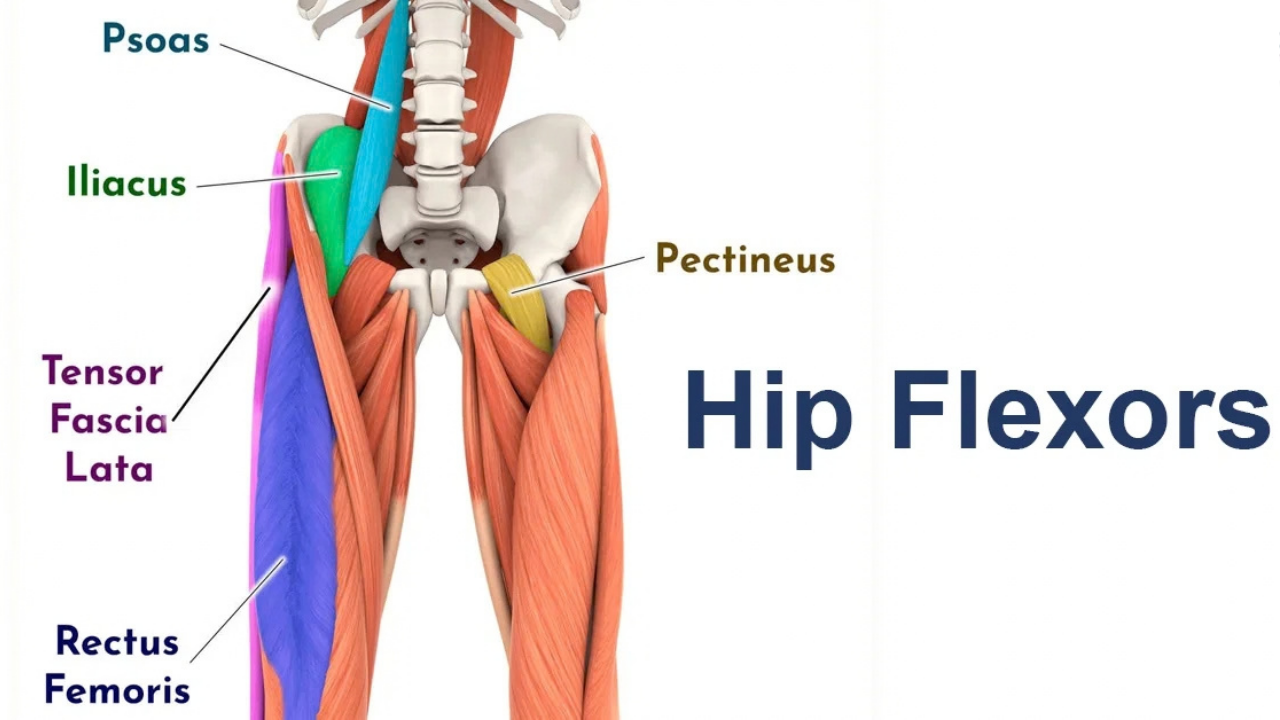
Your hip flexors are a group of muscles responsible for bringing your thigh toward your torso, along with helping to control movement and positioning around your hips.
Think about lifting your knee toward your chest, stepping up onto a big rock while hiking, or bringing your legs forward when you walk or run.
Your hip flexors are involved in all of those movements.
And on your yoga mat? They're doing a whole lot more work than you might realize.
They're helping you lift your legs in Boat Pose, create compression in your forward folds, pull your knees toward your chest in arm balances, and eventually find that beautiful sense of lightness when you begin exploring transitions that require your feet to leave the floor.
Here's where things get interesting.
You can have incredibly flexible hips and still have relatively weak hip flexors.
In fact, you can spend years improving your passive flexibility without developing the strength to actively move through or control that range of motion.
And that distinction can completely change the way you approach your practice.
Flexibility is only part of the conversation.
One of the things I've noticed after more than 20 years of practicing and teaching yoga is just how much attention we give to stretching and how little attention we sometimes give to strengthening the very muscles that help us use all that flexibility.
We work on getting deeper into a posture, but how often do we stop to ask whether we have the strength to get ourselves there?
Or better yet, whether we can actually do something with the range of motion we've created?
This is one of the biggest differences in how I teach yoga inside my online studio.
We don't simply move into a posture and hang out there hoping that more time will eventually create more depth.
We look at what the posture requires, which muscles are responsible for making it happen, and how we can build the strength and mobility to access more of it.
Sometimes that means working with a posture in a way that looks nothing like the final shape.
And sometimes it means discovering that the thing you've been stretching for years is something you haven't spent nearly enough time strengthening.
Let's talk about what this looks like on your mat.
Take a seated forward fold, for example.
You might have enough hamstring flexibility to bring your torso toward your legs, but can you actively lift one straight leg off the floor without leaning backward?
How about both?
That requires a different kind of work.
Or think about your Crow Pose. Maybe you've learned how to balance your weight over your hands, but you're struggling to bring your knees higher, lift your feet closer toward your seat, or create more space between your body and the floor.
There's a whole conversation about hip flexor strength and compression that can help you explore those possibilities.
And if you're working toward inversions, floating transitions, or more advanced arm balances, developing this strength becomes even more valuable.
These are some of the reasons I love layering targeted strength work into the yoga postures we're already practicing.
We're teaching our bodies how to create movement instead of relying exclusively on gravity, momentum, or the floor to get us there.
And the benefits don't end when you roll up your mat.
This might be my favorite part of the entire conversation.
Because as much as I love seeing my students make progress in their yoga practice, I also want them to feel the benefits when they're doing everything else they love.
Especially in midlife.
Maybe you're someone who loves hiking, but you've gotten used to feeling exhausted through your hips after a long day on the trails.
Or you're a runner who finishes a few miles and immediately feels the need to stretch everything out.
Maybe you take a long walk, climb a bunch of stairs, or spend a weekend exploring a new city and notice that your hips seem to complain afterward.
It's easy to assume that you simply need more flexibility.
And sometimes you do.
But sometimes what you're experiencing is a lack of strength or endurance in the muscles responsible for repeatedly lifting and controlling your legs.
When those muscles become stronger and better conditioned for the activities you enjoy, movement can begin to feel easier and less demanding.
You may find that you recover better from activities that used to leave you feeling worn out, or that you no longer feel the same constant urge to stretch your hips.
I love the possibility of replacing the thought, "My hips are so tight," with something entirely different:
"My hips are strong enough to do what I'm asking of them."
That's a pretty incredible shift.
And it's one that becomes increasingly valuable as we move through our 40s, 50s, and beyond.
So how do you strengthen your hip flexors?
Here's where I want to challenge the idea that strengthening always requires lifting heavier weights or adding another workout to your calendar.
You can begin developing hip flexor strength right inside your yoga practice.
One of my favorite places to start is with seated leg lifts.
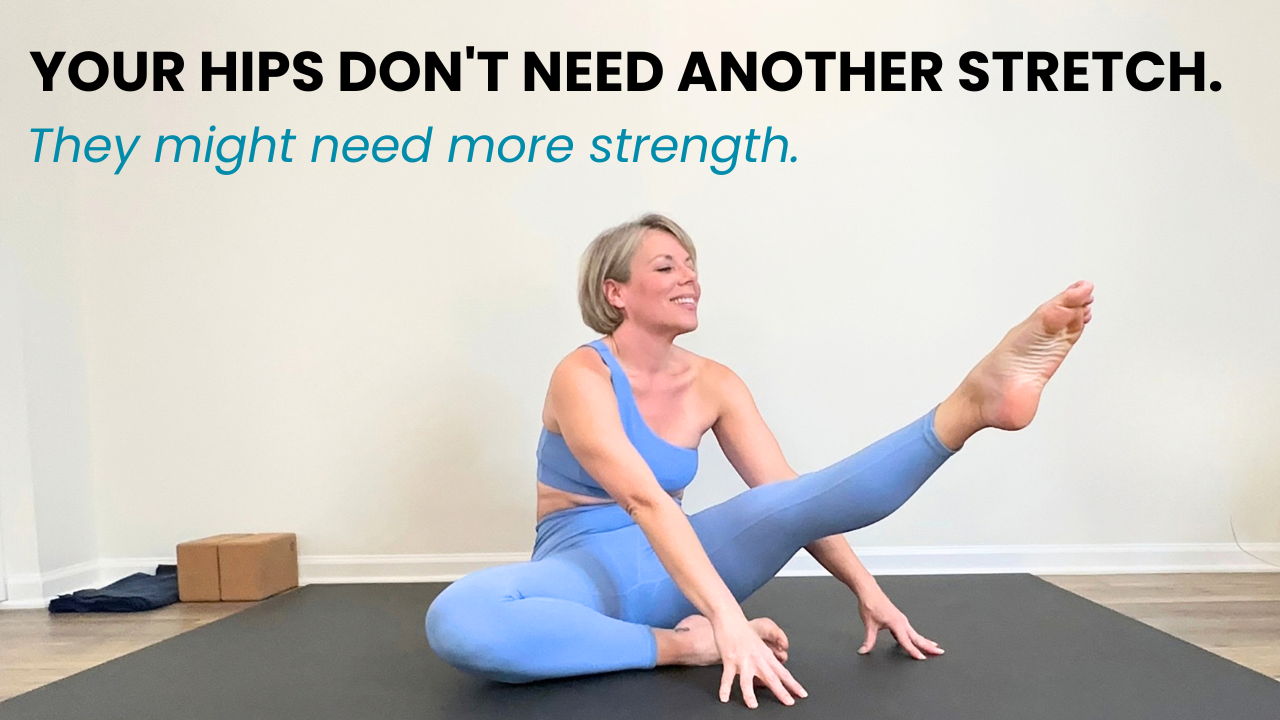
Sit on the floor with your legs extended in front of you and your hands resting beside your hips. Keeping one leg straight, actively lift your heel away from the floor, even if it's only an inch.
Lower it with control and repeat.
Sounds simple enough, right?
Give it a go.
You might be surprised by how much work is required to lift that leg without leaning backward, bending your knee, or recruiting momentum to do the job.
You can explore similar work with knee lifts, standing marches, and active compression drills, gradually increasing the challenge as your strength improves.
And here's something important: your hip flexors don't work alone. Your abdominal muscles, pelvis, and surrounding hip muscles all contribute to how effectively you move and control your legs.
That's why I prefer an approach that strengthens the entire movement rather than isolating one muscle and assuming we've solved everything.
Your yoga practice can give you so much more.
I want the women I teach to have flexibility. I want them to move well, explore beautiful postures, and continue discovering what their bodies are capable of.
But I also want them to have the strength to support all of it.
Because the goal isn't simply to see how far we can move into a posture.
It's to build a body that can move with strength, control, and confidence, whether we're practicing yoga, climbing a mountain, running a race, or doing something we've never attempted before.
And sometimes, the next big breakthrough in your practice begins when you stop asking how much farther you can stretch and start asking:
What would happen if I got stronger here?
That's the kind of work we do inside Tori G. Yoga Online Studio. Each month, we explore specific postures and build the strength, mobility, and understanding to take them further, with livestream classes, an on-demand library, and a plan that gives your practice somewhere to go.
Explore the Online Studio
Author